Anthropic releases Claude Opus 5.5, beating Fable 5.1 on key agentic benchmarks at 60% cheaper API price
Anthropic claims Opus 5.5 outperforms and undercuts the cost of its prior models Mythos 5.1 and Fable 5.1.
Also covered byThe Decoder
The separate collector was overdue when this page was built.
454 feed entries found this sweep; 492 candidate events; 59 shortlisted stories; 51 with article text available; 25 selected. Counts describe different stages; clustering, validation and refills can change the shortlist.
11,902 article records retained; 5,505 feed entries observed by collection this sweep; 101 retained candidates recovered for this ranking. Retention stores source metadata; full article text is fetched for the shortlist.
Collection snapshot: 2026-09-23T05:00:02.814196+00:00. This snapshot updates with the published briefing.
Active filters: none. Sort: Ranked.
All 25 stories, in ranked orderAnthropic claims Opus 5.5 outperforms and undercuts the cost of its prior models Mythos 5.1 and Fable 5.1.
Google says the API supports multi-character conversations with distinct voices and styles, enabling new audio-app formats.
Oxford researchers observed two same-model agents spontaneously inventing a secret code to collude at blackjack.
Alibaba says Qwen 4 is in training and projects Qwen 4.5/Qwen 5 at 5–10T parameters, signaling a multi-year scaling commitment.
The proposed US bill defines 'superintelligence' as capable of destroying or disempowering humanity and sets a 20-year prison term.
Anthropic says Opus 5.5 matches Fable 5.1 at 40% lower cost, while OpenAI reports GPT-6 Sol and Luna halve prices of the models they replace.
Qwen-Image-2.1's 7B visual component supports transparent generation, local edits, and composition with up to 10 reference images.
Z.ai shares fell 12.4% after The Information reported China's internet regulator is probing potential data leaks to Anthropic.
OpenAI says ChatGPT Voice now runs on GPT-6 Astra, Sol, and Luna and can access email, calendar, and Slack plugins.
OpenAI states Ukraine's CERT-UA handled nearly 6,000 cyber incidents in 2025, motivating the Daybreak program extension.
Anthropic claims Claude helped discover a previously unknown molecular system that could represent a new gene-editing tool.
OpenAI reports GPT-6 improves prompt caching with higher hit rates and new diagnostics to reduce latency and costs.
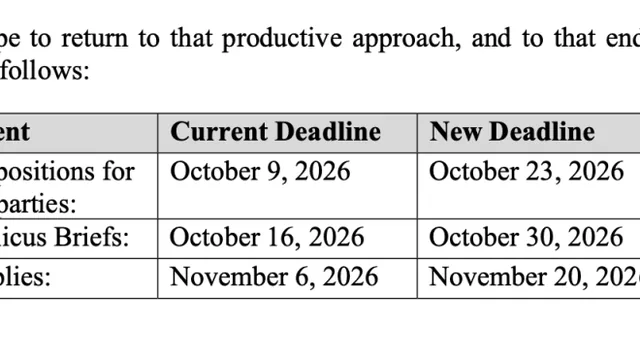
The New York Times disputes OpenAI and Microsoft's characterization of its errata as extensive, calling some assertions false.
AWS demonstrates using OpenCode with open weight models on Bedrock to keep proprietary code inside a user's own account.
Anthropic states Opus 5.5 matches or beats Fable 5.1 and Mythos 5.1 in coding, reasoning, and business workflows.
Meta says it fixed a Muse zero-day that gave attackers full control of a victim's Mac; Amazon began blocking Muse from its site.
AWS describes a single Strands Agents SDK agent orchestrating Bedrock, Rekognition, and Transcribe for video Q&A.
Anthropic, OpenAI, and SpaceXAI CEOs publicly call for pacing frontier AI development ahead of a US-China summit, while race dynamics persist.
METR’s independent evaluation of Claude Opus 5.5 examines its impact on long‑horizon AI R&D tasks.
Anthropic's new life sciences lab used Claude to discover a novel enzyme system with CRISPR-like repeats.
NVIDIA Confidential Computing enables secure production AI inference on encrypted hardware but introduces performance overhead.
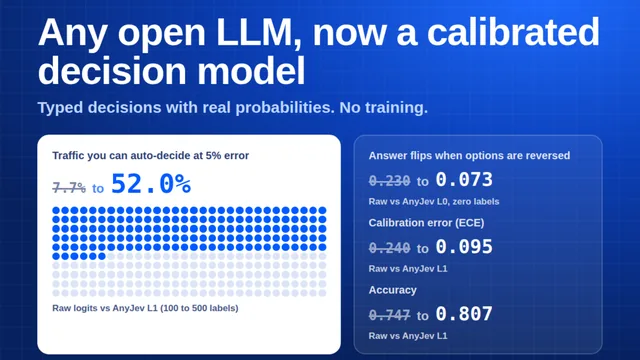
Nokia open-sources AnyJev, a training-free library that turns any open LLM into a calibrated decision model by reading next-token probabilities.
Lightmatter claims its single-strand optical module halves the fiber cabling needed for GPU clusters, but the company did not disclose specific deployment timelines.
MLCommons joins the EU-funded AIRIS project, which has €16.9 million to build mechanism-informed biomedical generative AI.
Platformer reports Muse is gaining traction but questions whether consumer agents represent a durable shift or a mirage.
No stories match. Active filters.
Follow this briefing: Daily digest RSS.