GLM-5.3 hits the API at $1.4/$4.4 per million tokens
Developers can now call z.ai's GLM‑5.3 via API at $1.40/$4.40 per million tokens, expanding low‑cost open‑source model use.
288 candidate events; 58 shortlisted stories; 43 with article text available; 25 selected. Counts describe different stages; clustering, validation and refills can change the shortlist.
Active filters: none. Sort: Ranked.
All 25 stories, in ranked orderDevelopers can now call z.ai's GLM‑5.3 via API at $1.40/$4.40 per million tokens, expanding low‑cost open‑source model use.
Anthropic claims Claude agents can autonomously run protein design pipelines, achieving up to 35 % hit rates versus typical 10‑15 %.
Cerebras announces its next‑gen CS‑4 system, delivering higher throughput that speeds up large‑model training and inference.
Flock Safety’s new AI can identify drivers and trace vehicle movements, linking plates to personal data for police investigations.
Gary Marcus reports OpenAI’s trust and IPO prospects are faltering, with a worsening burn rate signaling heightened business risk.
vLLM adds agentic optimizations in InferenceX, cutting latency for LLM‑driven agents and lowering compute costs.
Hugging Face’s Multi‑Vector encoder lets users load ColBERT‑style checkpoints for token‑level retrieval, boosting accuracy despite larger indexes.
Mojo 1.0’s open‑source compiler under Apache 2 enables Python‑style GPU programming, easing high‑performance AI development.
Hugging Face shows agentic memory must be tuned per model tier, with strong models needing full guidelines and weaker ones a compact core.
ByteDance’s Doubao agents now generate competitor briefings and synthesize physical‑world training data, expanding AI‑driven enterprise workflows.
Alipay launches Abao, a full‑stack super agent for cars and phones, forecasting rapid growth of agent‑based commerce.
OpenAI halted significant Astra training runs and added stricter monitoring and alignment safeguards after detecting critical cyber capabilities.
NVIDIA’s ALCHEMI Toolkit offers PyTorch‑native GPU blocks, letting AI coding agents streamline atomistic material simulations.
Anthropic’s August risk report discloses extensive new safety data, including details on its leading ‘Model 2’, aiding practitioner awareness.
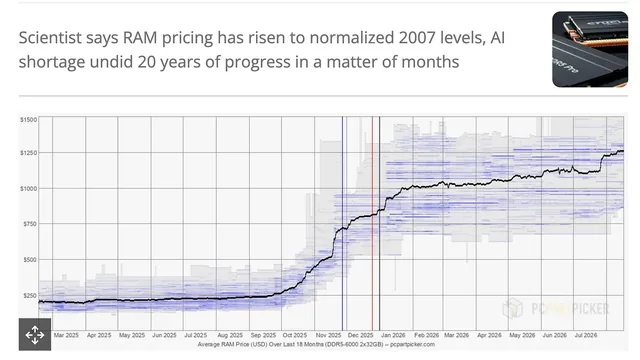
Memory prices have surged 500 % in a year, forcing AI teams to reassess hardware budgets and model scaling.
Anthropic demonstrates Claude can autonomously design de novo protein binders, streamlining early drug discovery.
Guidelight finds major AI labs, including Anthropic and OpenAI, score poorly on internal safety practices, especially prevention and containment.
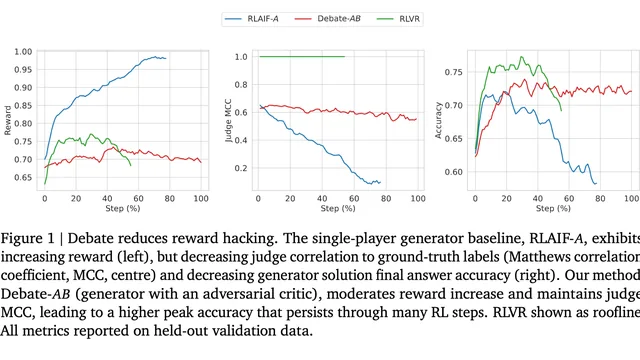
Research shows debate‑training opponents curtail reward‑hacking of LLM judges in RLAIF, enhancing alignment robustness.
AgentX introduces workload optimizations that boost efficiency of agentic LLM deployments on InferenceX.
xAI releases Grok Bot, an enterprise‑focused AI assistant designed to streamline team workflows.
Block open‑sources Berd, a desktop workspace that runs across models and stores agent conversation history locally.
Anthropic reports Claude accelerates protein design and analytical chemistry workflows, cutting development cycles for researchers.
Analysts note China’s AI‑chip sector remains resilient, with Biren Technology gaining GPU wins despite potential US module bans.
Study finds Olmo 3 often guesses drug classes from name suffixes, exposing a shortcut that can mislead health‑related queries.
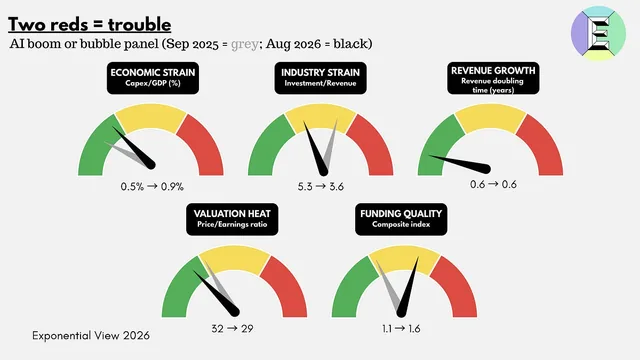
Exponential View’s analysis shows AI revenues hit $126 B and demand stays high, suggesting the sector isn’t in a bubble.
No stories match. Active filters.