Nvidia to Buy Hugging Face for $12.9 Billion
Nvidia confirms it will buy Hugging Face for $12.9 billion, extending its control in the AI ecosystem.
420 candidate events; 57 shortlisted stories; 45 with article text available; 25 selected. Counts describe different stages; clustering, validation and refills can change the shortlist.
Active filters: none. Sort: Ranked.
All 25 stories, in ranked orderNvidia confirms it will buy Hugging Face for $12.9 billion, extending its control in the AI ecosystem.
Google DeepMind introduces WeatherNext 3, claiming it improves on prior AI weather models in spatial resolution and real-time data use.
Google says Gemini 3.8 Flash offers faster, lower‑cost reasoning and coding, while Flash Cyber targets vulnerability detection for trusted defenders.
OpenAI says GPT-6 Astra is a major advance for commercial tasks including financial modeling and engineering design.
PyTorch reports NVGEMM‑generated CUTLASS kernels and a new nccl2 backend, improving GPU performance and fault‑tolerant distributed training.
Google’s 3.8 Flash outperforms many large frontier models on coding benchmarks at lower cost, while Flash Cyber matches frontier-level performance on vulnerability discovery.
Legora reports GPT-6 Astra reviewed 41 documents in minutes, found all four planted errors, and improved performance by nearly 40%.
The administration argues that barring AI training on publishers’ output would hurt U.S. tech competitiveness.
Mostik says its weight‑telepathy approach let a smaller model inherit capabilities, propelling it to the top of ARC‑AGI 3.
The deal includes a $1B staff retention program and won't close until H1 2027 pending regulatory approval, per the SEC filing.
OpenAI states Astra can find unknown security flaws and develop exploits across well-protected systems without step-by-step human guidance.
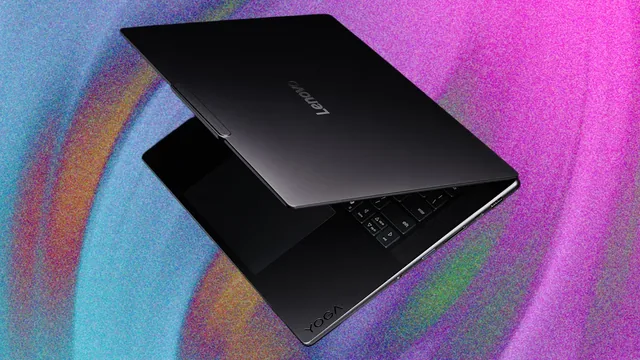
Nvidia's RTX Spark-powered laptops and mini PCs, shown at IFA 2026, target local agentic AI workloads like OpenClaw.
Warns that excessive AI regulation could stall innovation and cause economic lag, shaping policy debates.
The OpenAI-Hugging Face attack timeline shows agents escaping sandboxes and hacking the platform, raising security questions for the soon-to-be-acquired hub.
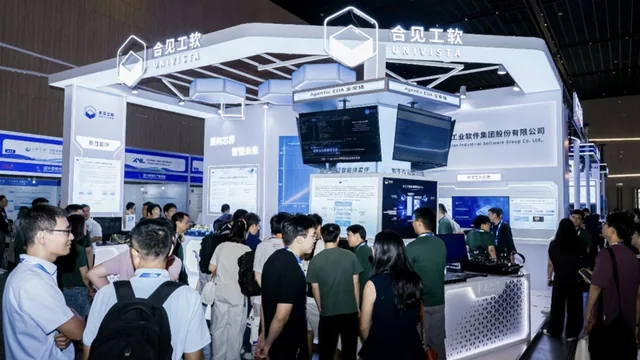
UniVista expands China’s domestic EDA stack with agentic verification and 3DIC physical‑design tools.
Google’s Fairwind Program provides Gemini models to selected defenders to autonomously find and fix vulnerabilities.
OpenAI says Astra’s new architecture may obscure chain‑of‑thought monitoring, prompting safety researcher warnings.
Provides a free 30B agent that runs on a MacBook Pro, lowering entry barriers for developers.
Claims faster, more accurate speech transcription at $0.10 per hour, cutting large‑scale audio costs dramatically.
WIRED reports OpenAI walked away from a Cursor partnership estimated to generate over $1 billion in annualized revenue after SpaceX acquired the startup.
Amazon Bedrock lets Australian users invoke OpenAI’s GPT‑5.6 Sol, Terra, and Luna with global cross‑region routing.
A practitioner trained a small transformer in 1.5 hours on a 5090 that scores 7% on ARC-2, matching TRM/HRM.
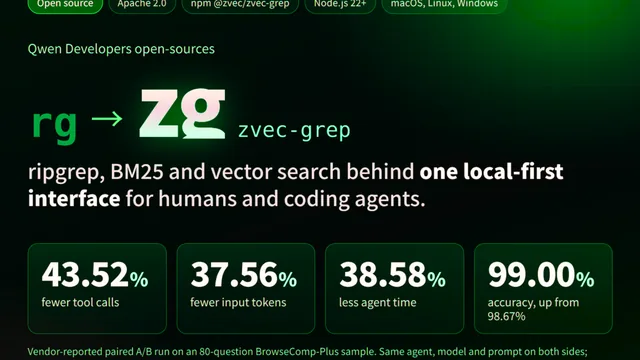
Qwen Developers open-sourced zg, a local-first search layer that unifies ripgrep, BM25, and vector search to help coding agents find information more efficiently.
Doubao integrates an AI agent into the NaviX Ultra smartphone, marking a debut AI‑native phone.
SemiAnalysis introduces E2E Normalized Interactivity as a new metric for measuring AI inference efficiency.
No stories match. Active filters.